
FABRICATOR’S FIELD GUIDE / ABOUT
About Fabricator’s Field Guide
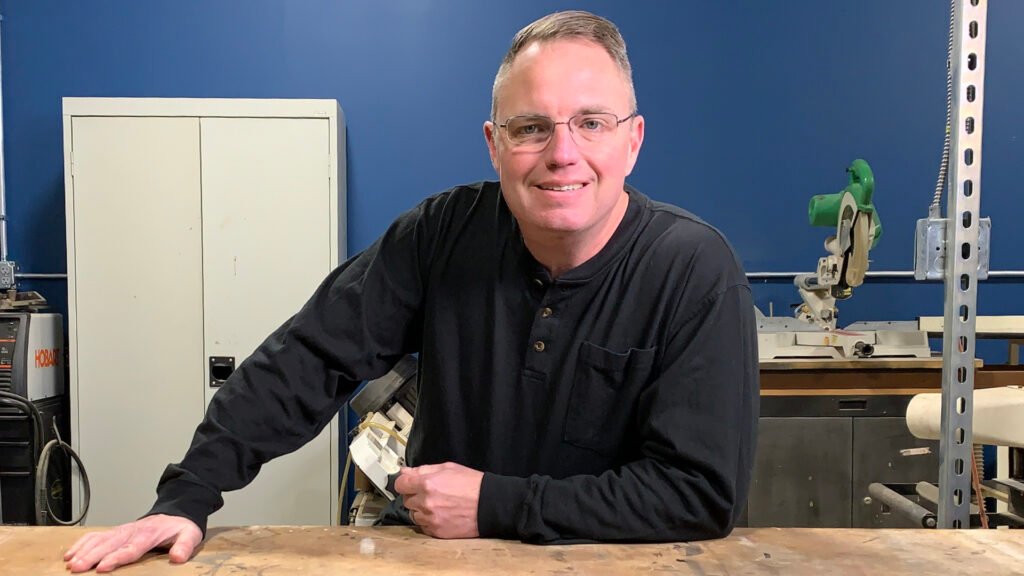
A lifetime around making things
I’m Jeremiah Baker, and I grew up around people who made things. My father was a Western bronze sculptor, and my mother specialized in polychroming the finished sculptures. I spent much of my childhood around artists, fabricators, and foundry craftsmen. I watched bronzes being assembled, welded, finished, and given their final patinas. Making things was simply part of the world I grew up in.
That early exposure eventually developed into a career of my own. I spent years working in woodworking, furniture making, and decorative painting before developing a specialty in hand-carved art frames and traditional gilding. I eventually turned that work into my own business, creating custom frames for artists and galleries.
Later, I moved into engineering and manufacturing, earning my engineering degree and building a career in aerospace. Today, I work in the sustainment and repair of military jet engines, collaborating with manufacturing and overhaul shops to solve practical problems involving machining, materials, measurement, and repair.
My background has taken me from traditional craftsmanship to modern aerospace engineering, but the common thread has always been making things work. I’ve learned that understanding the principles behind a process is important, but so is knowing how to apply them when you’re working with actual materials, tools, and equipment.
Understanding comes from doing
There is a kind of understanding that only comes from working with your hands. You learn how materials behave, how tools respond, and what to look for when something isn’t going as planned. You develop an intuition that comes from experience rather than instruction alone.
You build that intuition by doing the work, making mistakes, recognizing what went wrong, and learning how to correct it. Over time, you begin to see problems differently. You become better at figuring out how something is made, what it takes to build it, and how to approach something you haven’t tried before.
I’ve come to believe that practical skills are among the most valuable things a person can develop. Skills are almost more valuable than tools. Tools give you the means to do something; skills give you the ability to understand a problem and put those tools to work.
Why I started Fabricator’s Field Guide
Throughout my career in manufacturing and aerospace, I’ve seen how much practical knowledge is developed over a lifetime of working in shops. I’ve also seen how easily that knowledge can be lost when experienced craftspeople and technicians retire without passing it along.
A formal education provides an important foundation, but it isn’t a substitute for hands-on experience. We need both.
I started Fabricator’s Field Guide to help make practical experiences more accessible and give people an opportunity to develop skills through making things themselves.
Woodworking is a natural place to begin. It provides an accessible introduction to fabrication using relatively simple tools and forgiving materials. The fundamentals of measuring, understanding materials, using tools, and solving problems carry into machining, metalworking, manufacturing, and many other disciplines.
Build skills. Develop intuition.
Every Fabricator’s Field Guide experience is designed around making something worthwhile while learning the skills behind it.
Rather than simply showing you what to do, I want to explain why you’re doing it, what to look for, and how to recognize when something isn’t right. The goal is to develop your own judgment and understanding, not just your ability to follow instructions.
Ultimately, I’d like you to reach a point where you can look at something you’ve never made before and think, “I can build that.”
That’s what Fabricator’s Field Guide is about.
Jeremiah Baker
Founder, Fabricator’s Field Guide